
ADHDier
Understand
your brain.
Build a life that
actually works.
ADHD support that starts with what’s actually happening — and helps you figure out what to do next.
My Check-In
Tell ADHDier what’s actually going on.
About ten thoughtful questions, with room to explain the part that doesn’t fit neatly into a checkbox. Then ADHDier builds a plan around what you actually told us.
Do a check-in →Same ADHD. Different day.
Different plan.
Scroll the plan ↓
Not a generic list of ADHD tips. A plan built around what you actually told us.
ADHD shows up everywhere.
Where is it getting in the way?

Go deeper
Learn how to work
with your brain.
13 courses available now · $49 USD each


The Journal
ADHD, in
real life.

Getting Things Done / adults
Why tiny tasks can become
weirdly impossible.
Sending an email. Booking a dentist. Returning a parcel. None of these are hard, exactly — so why do they sit untouched for weeks while much bigger things get done first?

Feelings + Overwhelm / teens
Why Does Being Left on Read Feel Like a Crisis?
Two grey ticks. No reply. Forty minutes later your stomach still hasn't settled. Here's what's actually happening when silence on a screen turns into a five-alarm emotional event.
9 min read
Time + Remembering / adults
The ADHD Experience of Time
For many adults with ADHD, time doesn't behave like a steady, external fact. It behaves like weather — mostly absent until it's suddenly, urgently present.
11 min
From the founder
“You don’t need to become better at having a different brain. You need to understand the one you already have — and build from there.”
Sian Trombley
Therapist + Founder, ADHDier
My ADHDier
A space that
gets you.
Save what helps. Quotes, tools, articles and ideas that land. Your board, your way.
Open my board →Save
What's useful
See
What supports you
Return
When you need it
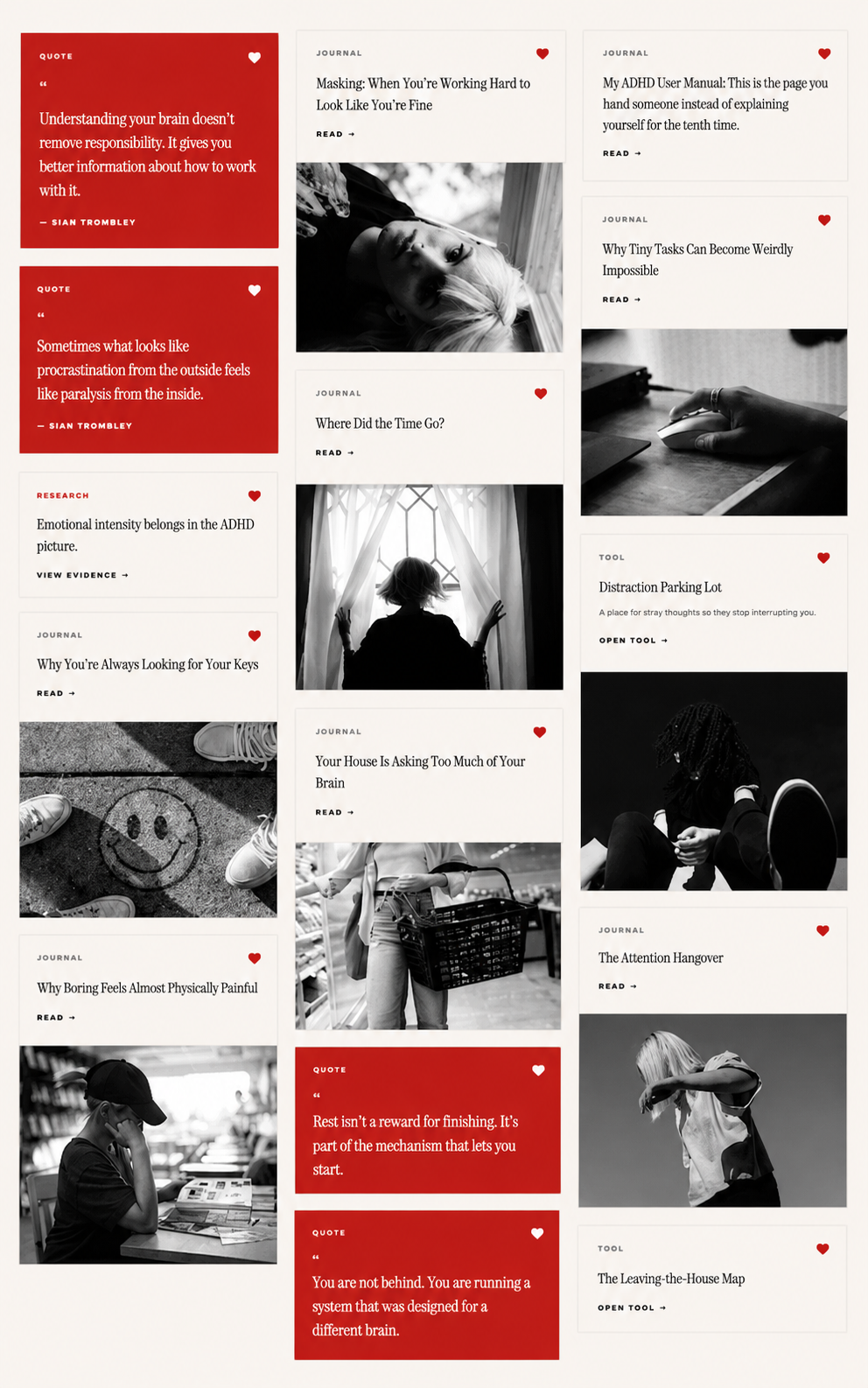
Scroll the board ↓
Everything you heart across ADHDier lands here — in one place that's yours.
From ADHDier
Good things for
different brains.
New Journal stories, useful tools, interesting research and practical ideas for kids, teens and adults — occasionally, not constantly.
Useful things only. No inbox chaos.