Getting Things Doneteens
Waiting Until the Panic Kicks In
It's 11:40pm, the assignment is due at 8am, and for the first time all week your brain is fully, completely online. Why does it take this long to show up?
Sian Trombley
9 min read
Updated AUG 22, 2026
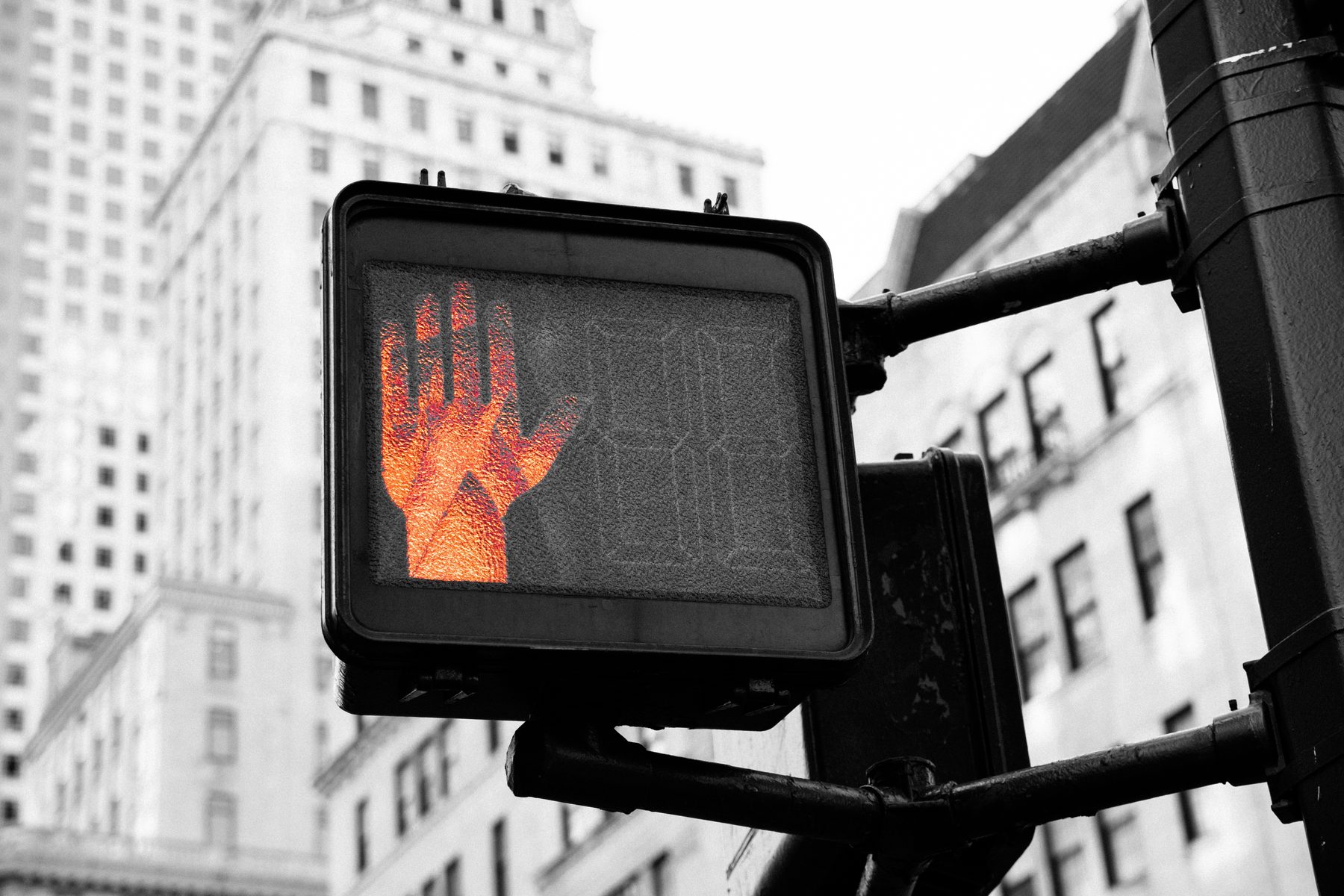
The essay has been sitting there for eleven days. You've opened the document maybe six times, typed a sentence, deleted it, closed the laptop. Nothing happened for eleven days. Then, at some point on day twelve, something shifts — your chest tightens a little, your thoughts start moving faster, and suddenly you are writing, actually writing, for three hours straight without checking your phone once. You hand it in at 7:52am and it's... good. Genuinely good. And also you are exhausted in a way that has nothing to do with how much sleep you got.
If this is a familiar shape to your week, you already know the cycle by feel even if you've never mapped it out: delay, then pressure, then a jolt of something sharp and electric, then a burst of work that finally moves, then a crash that takes a day or two to climb out of. It has a name worth knowing, because naming it is the first step to loosening its grip: the urgency cycle.
Why panic is such a reliable ignition switch
Your brain's system for starting tasks — task initiation, in the language of executive function — doesn't weigh importance the way a to-do list app does. It doesn't calmly rank 'due in two weeks' against 'due tomorrow' and adjust your energy accordingly. It responds far more reliably to signals that feel immediate: a countdown, a consequence you can practically feel, a threat that has stopped being abstract and started being real. Panic supplies all three at once. That's not a coincidence — it's chemistry doing exactly what it evolved to do, just aimed at an essay instead of a genuine emergency.
So when the deadline is far away, the task can feel almost weightless — technically real, but not real enough to move you. As the deadline closes in, your nervous system starts treating it more and more like a threat, and threat is something your body has always been extremely good at responding to. The adrenaline that finally shows up isn't random. It's your body's oldest, most dependable alarm system, arriving right on schedule — just a schedule set by fear instead of by choice.
Panic isn't proof you needed the pressure. It's proof your brain finally got a signal urgent enough to act on — and there are ways to send that signal earlier, on your own terms.
Why it can look like it works
Here's the genuinely confusing part: the panic-fuelled version of you often does fine. Sometimes it does better than fine — the writing under pressure comes out sharp, decisive, oddly clear, because there's no time left to second-guess every sentence. That result teaches your brain a very convincing lesson: this works, keep doing this. And it's not wrong, exactly. It's just incomplete. It leaves out everything the strategy costs you that doesn't show up in the grade — the anxious hours beforehand, the sleep you didn't get, the version of the assignment you might have done if you'd had time to actually revise it rather than just outrun the clock.
The urgency cycle also quietly narrows your options. If your only working ignition switch is panic, then every task, no matter how big or small, eventually gets routed through fear to get done at all. That's an exhausting way to run a life, and it means the things that don't come with a hard, external deadline — an application with a soft due date, a chore nobody's tracking, a message you keep meaning to send — can drift for months, because nothing ever arrives to trigger the switch.
What this looks like in real life
What the cycle can look like
- 01Telling yourself all week you'll 'start it this weekend,' and meaning it every single time you say it.
- 02Feeling almost nothing about a deadline until it's inside a 24-hour window, and then feeling everything at once.
- 03Producing your best work at the worst hour, and not being sure whether to be proud of that or worried by it.
- 04Sleeping badly the night after a deadline, even once the thing itself is finally done and handed in.
- 05Noticing that untimed tasks — the ones with no one checking — seem to never get their turn at all.
Try this
Build a Fake Deadline That Actually Works
Since your brain responds to urgency more than to distant importance, you can create a milder, earlier version of urgency on purpose, instead of waiting for the real deadline to manufacture panic for you.
- 01Pick a checkpoint two or three days before the real deadline — not the whole task, just a visible chunk of it.
- 02Tell one other person that exact checkpoint, out loud or in a text, so it isn't only living in your head.
- 03Set a timer and commit to starting, not finishing, before it goes off — the goal is contact with the task, not completion.
- 04When the checkpoint passes and something got done, notice that feeling on purpose. That's the evidence you're trying to build: proof that starting doesn't require fear.
The evidence
What's actually understood here
Task initiation is well established in executive function research as a distinct skill from motivation or intelligence, and difficulties with it are consistently reported in ADHD. The tendency to respond more strongly to immediate, concrete consequences than to distant ones — sometimes discussed under the idea of delay aversion or reward sensitivity — is a widely reported pattern, though it's best understood as a general tendency rather than a fixed rule for every task or every person.
Barkley's Taking Charge of ADHD; Faraone et al. 2021 World Federation of ADHD International Consensus Statement, Neuroscience & Biobehavioral Reviews
Loosening the cycle, without pretending it's easy
None of this means panic will vanish from your life, or that you need to eliminate every last-minute scramble to be doing things right. Plenty of people, ADHD or not, do some of their sharpest work under real pressure — that's not automatically a problem. The problem is when panic becomes the only door your brain will walk through, because then every task quietly turns into a small emergency, and emergencies are draining even when you survive them well.
The more useful goal is variety: having at least one or two ways to start a task that don't depend on fear, so the urgency cycle becomes a tool you sometimes use on purpose rather than the only mechanism you have. That might mean externalizing an earlier deadline, working alongside someone else so there's a witness, or simply getting better at noticing the early, quiet moment when a task is still small — before waiting turns it into something loud.
The panic isn't the problem to feel guilty about — it's a signal your brain learned to rely on. You can teach it to respond to quieter signals too.
This article is general educational information, not therapy, diagnosis or individual medical advice. If something here matters for your situation, a qualified professional who knows you is the right next step.